

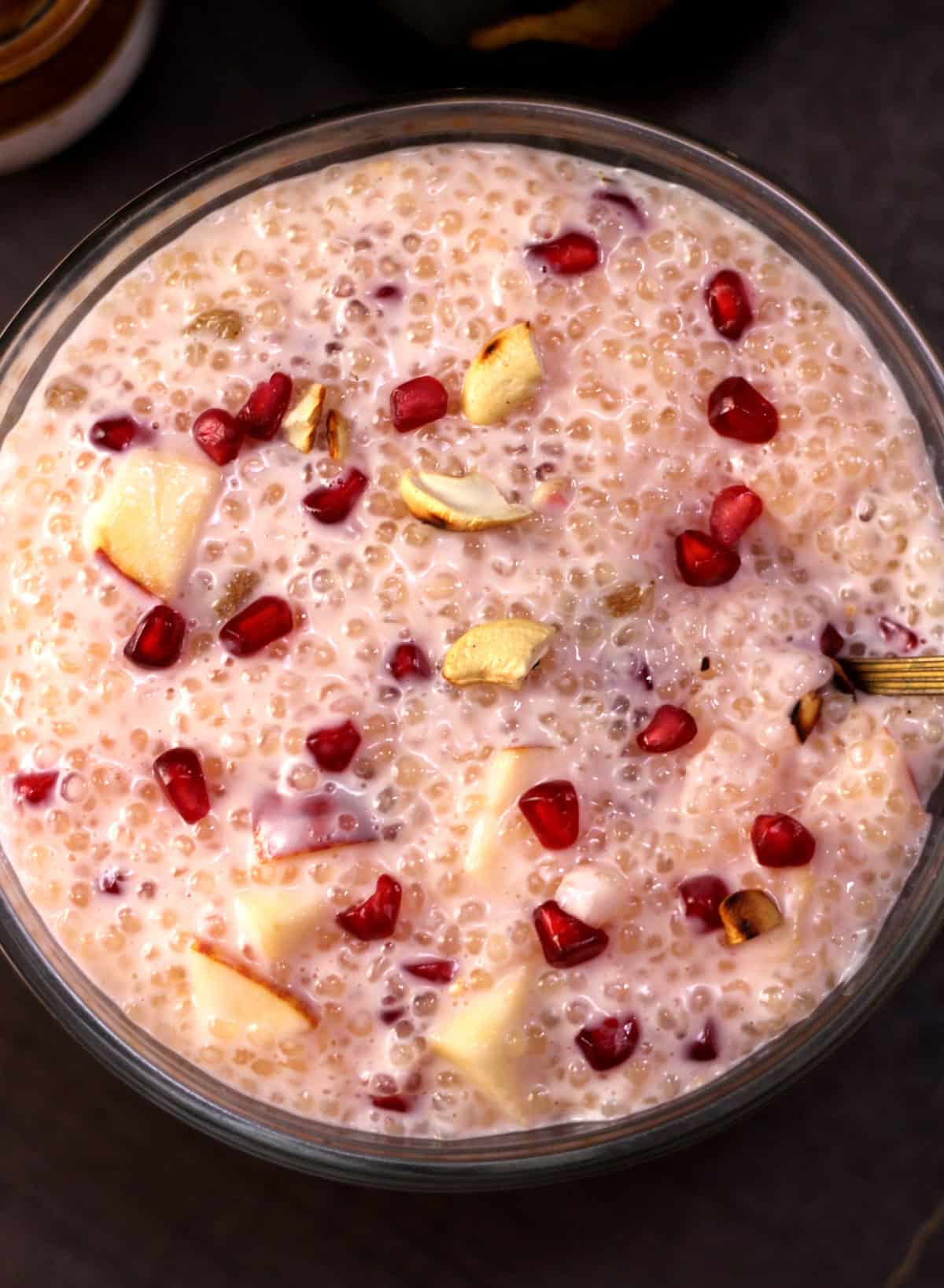
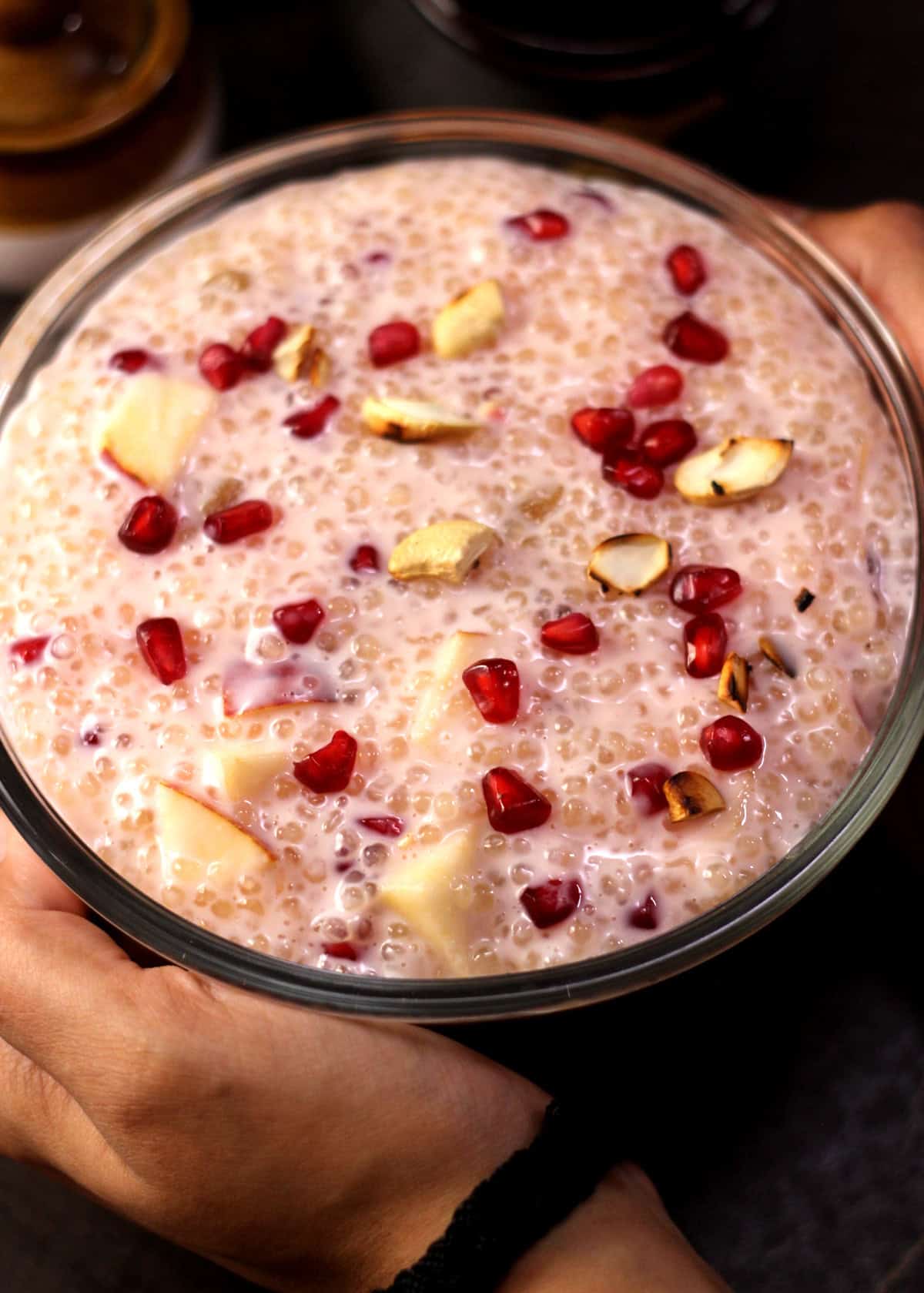
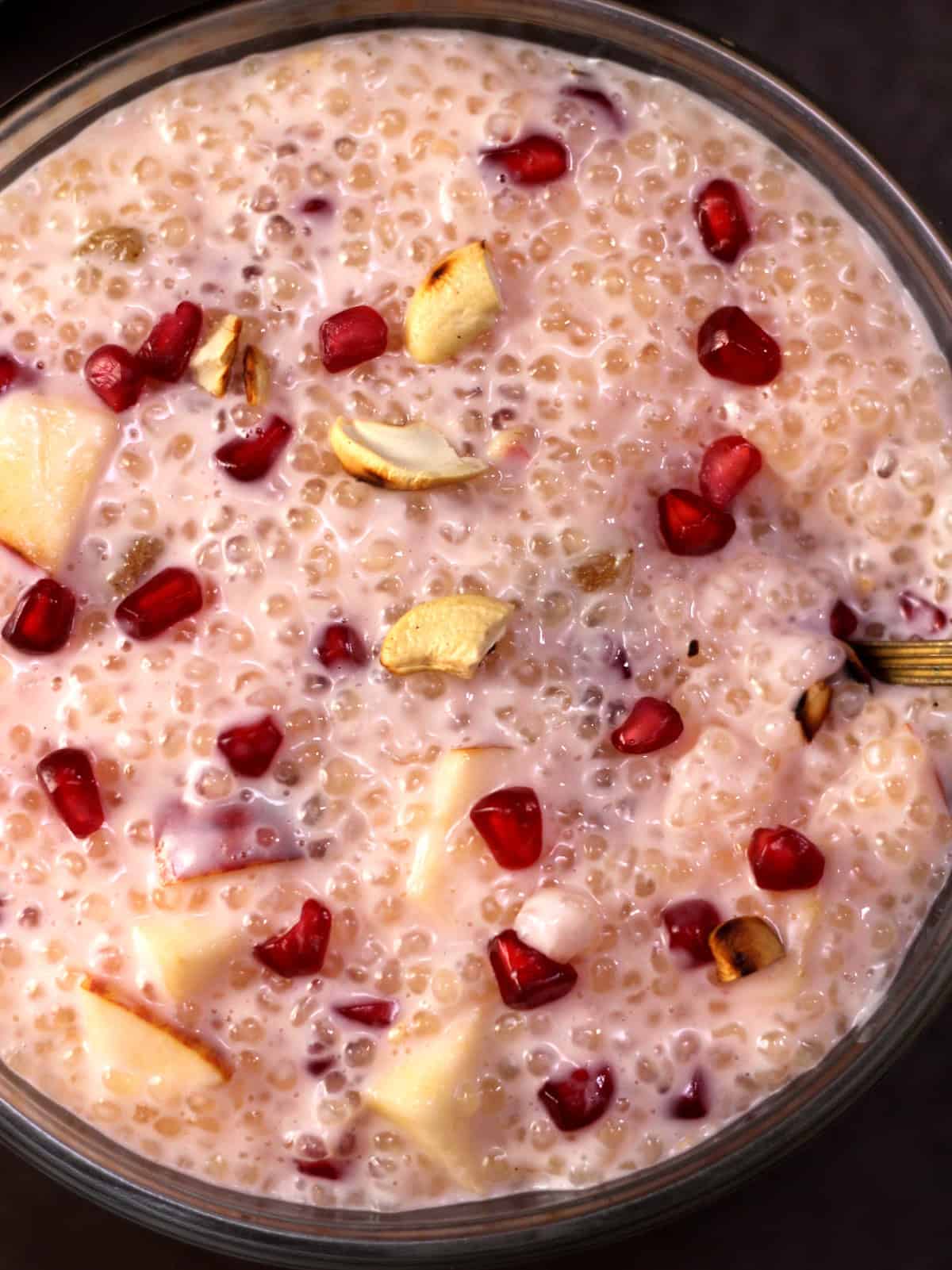
Tapioca Pudding is a simple, easy-to-make creamy dessert made with small tapioca pearls (sago), milk, sugar, cardamom (saffron), and fresh fruits and nuts of your choice. This sago dessert is best enjoyed when served warm or chilled.
Check out traditional Indian sabudana kheer and list of interesting sabudana recipes.
Why will you love this recipe?
- This sago dessert is easy to make with simple ingredients you likely already have.
- The milk creates a rich, creamy base, while tapioca pearls add a soft, chewy texture.
- Tapioca pearls are naturally gluten-free, making this one of the best dessert options for many.
- Highly customizable: add saffron, cardamom, vanilla, or seasonal fresh fruits.
- Serve it during festivals like Navratri, Diwali, Ganesh Chaturthi, or Holidays like Christmas and Thanksgiving, or at any family occasion.
Check out the list of Thanksgiving desserts, Christmas desserts, Diwali sweets, and Navratri recipes for 9 days.
What is tapioca pudding?
Sabudana, also known as tapioca or sago, comes from the cassava root starch. When soaked and cooked in milk, the pearls soften and become glossy, and they release starch that thickens the pudding. The result is a creamy, chewable, spoonable dessert very similar to sabudana kheer, but thicker and pudding-like.
Because of its thicker, pudding-like texture, some also call this sago custard without custard powder.
Subscribe Below to Receive Free Meal Plans Every Week
Sign up for our newsletter to receive our weekly meal plans directly in your inbox!
Ingredients
Tapioca pearls: I used small tapioca pearls for this recipe. You can also use medium or large ones. It is also known as sago, sabudana, or sabakki.
Milk: Whole milk gives a rich and creamy base. You can also use toned milk for a lighter version and dairy-free milk for a vegan version.
Sugar: Sweetener used.
Flavoring: Saffron or cardamom
Nuts: cashews and raisins.
Fruits: apples and pomegranate.
Check out the recipe card for the full list of ingredients.
Step-by-step instructions
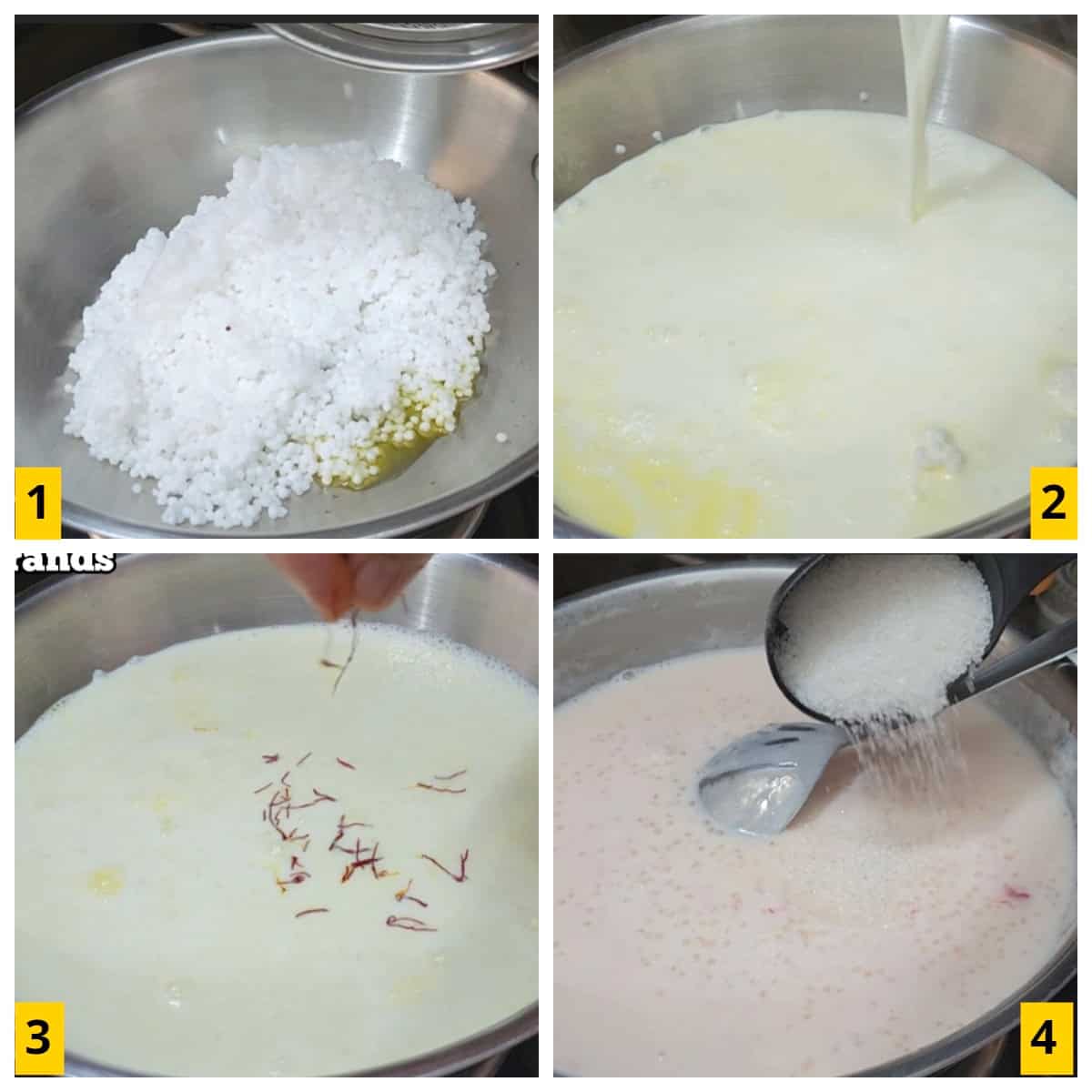
- Nicely wash the tapioca in water until the water runs clear. Add enough water to cover them and soak for 1-2 hours. Smaller sabudana takes less time than larger ones.
- Drain any excess water from the soaked sabudana.
- In a pan, heat ghee, add the drained sabudana, then mix for a minute.
- Add warm milk, saffron, and cook until the sabudana turns translucent.
- Keep stirring to prevent it from sticking and burning at the bottom.
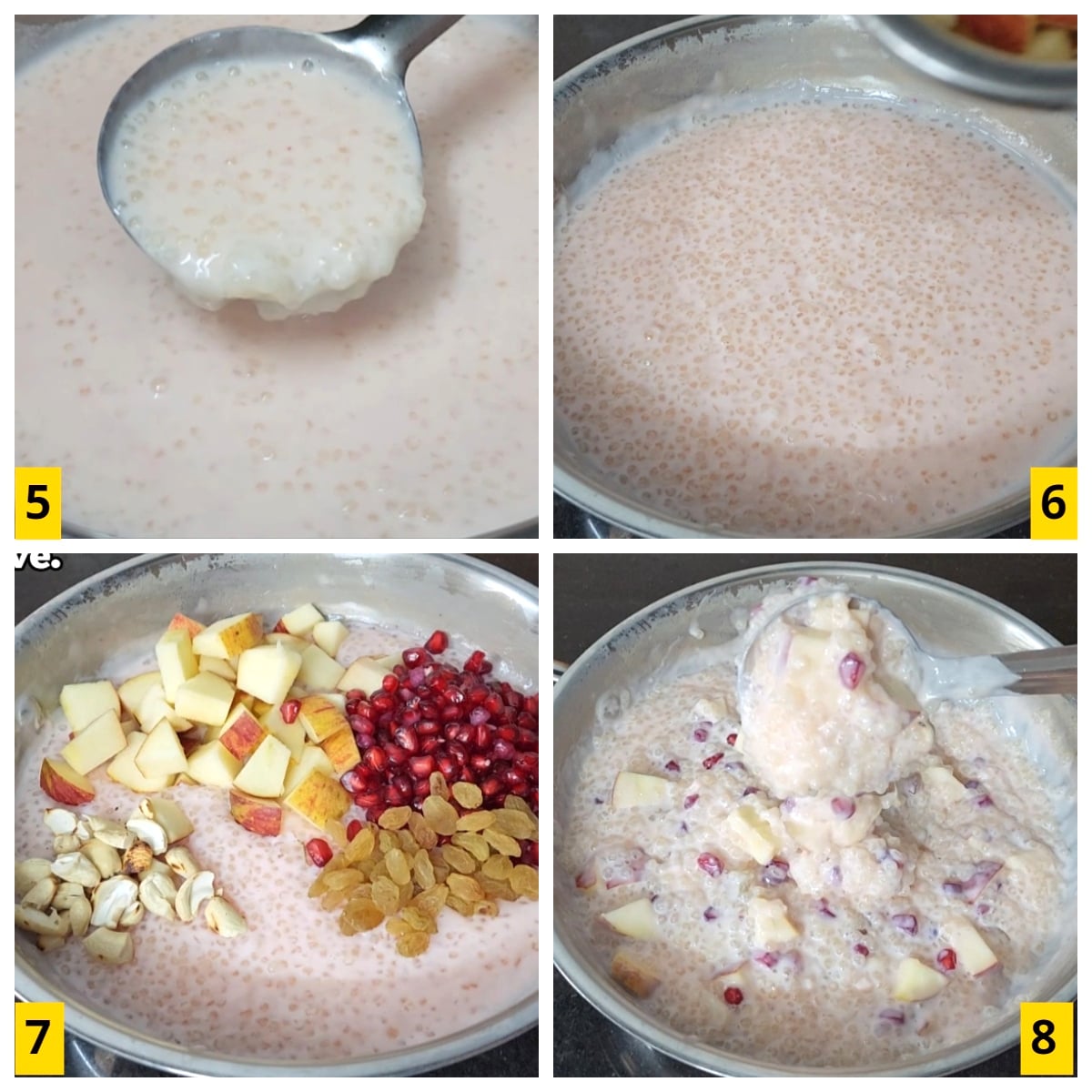
- Now add the sugar and mix until it dissolves completely.
- Switch off the flame. Let this cool down.
- Add apples, pomegranate, raisins, cashews, and mix well.
- Serve immediately or refrigerate and serve chilled.
Tips
- Tapioca pearls keep absorbing liquid as they cool. So the dessert will only get thicker. You can thin it down by adding cold milk or water.
- Adding ghee and sautéing for the first minute is optional. It adds unique flavor.
- For a tropical-flavored pudding, use coconut milk; for a Western-flavored pudding, add vanilla extract.
- I have used small tapioca pearls. If you use larger ones, you may need to cook it a little longer and add more liquid.
- Refrigerate any leftovers for up to 2 days. Add a splash of milk to thin it down if needed, and serve chilled.
- When using saffron (kesar), the color of the sabudana pudding will depend heavily on it. Today, in a hurry, I bought one from a local store, so it has this color. If you use really pure saffron, you will get a nice, pleasant yellow color, which I most of the time do during festivals.
Recipe FAQS
Indian sabudana kheer is also called tapioca pudding. The difference is that in kheer, sabudana is cooked in water first, then milk is added, while in pudding, sago is cooked in milk from the beginning to make a rich, creamy base.
Tapioca pudding can be made with or without eggs, while kheer is always made with milk only and is eggless and fasting-friendly.
Tapioca pudding can also include fresh seasonal fruits like apples, bananas, kiwi, grapes, and pomegranates, and when prepared this way, it is also known as sago custard or sabudana custard.
Yes. Tapioca is naturally gluten-free, and all the ingredients added to this pudding are gluten-free as well. This dessert is one of the best options for people on a gluten-free diet.
Sabudana is one of the most preferred ingredients during Indian fasting days like Navratri and Ekadashi. Since this pudding dessert uses all vrat-friendly ingredients, you can easily make it during Hindu fasts.
It is always good to soak them for at least 1 hour, as it reduces your overall cooking time. But if you are using instant sabudana, you can skip this. Check the package instructions and use accordingly.
Yes. sabudana is another name for tapioca pearls made from cassava roots.
More pudding recipes


Recipe card
Creamy Tapioca Pudding | Sabudana Pudding | Sago Dessert
Equipment
Ingredients
- ½ cup Tapioca pearls sago, or sabudana
- 1 tablespoon Ghee optional
- 2 ½ cups Warm milk
- ¼ teaspoon Saffron strands Cardamom powder
- ¼ cup Sugar adjust to taste
- 1 Apple chopped
- 1 Pomegranate
- 1 tablespoon Cashews toasted
- 1 tablespoon raisins
Instructions
- Nicely wash the tapioca in water until the water runs clear. Now add enough water to cover them and soak for 1-2 hours. Smaller sabudana takes less time than larger ones.½ cup Tapioca pearls
- Drain any excess water from soaked sabudana.
- In a pan, heat ghee, add drained sabudana, then mix for a minute.1 tbsp Ghee
- Add warm milk, saffron, and cook until the sabudana turns translucent.2 ½ cups Warm milk, ¼ tsp Saffron strands
- Keep stirring to avoid it from sticking and burning at the bottom.
- Now add the sugar and mix until it dissolves completely.¼ cup Sugar
- Switch off the flame. Let this cool down.
- Add apples, pomegranate, raisins, cashews, and mix well.1 Apple, 1 Pomegranate, 1 tbsp Cashews, 1 tbsp raisins
- Serve immediately or refrigerate and serve chilled.
Video
Notes
- Tapioca pearls keep absorbing liquid as they cool. So the dessert will only get thicker. You can thin it down by adding cold milk or water.
- Adding ghee and sautéing for the first minute is optional. It adds unique flavor.
- For a tropical-flavored pudding, use coconut milk; for a Western-flavored pudding, add vanilla extract.
- I have used small tapioca pearls. If you use larger ones, you may need to cook it a little longer and add more liquid.
- Refrigerate any leftovers for up to 2 days. Add a splash of milk to thin it down if needed, and serve chilled.
- When using saffron (kesar), the color of the sabudana pudding will depend heavily on it. Today, in a hurry, I bought one from a local store, so it has this color. If you use really pure saffron, you will get a nice, pleasant yellow color, which I most of the time do during festivals.
Nutrition
Did you like this recipe? Please leave a star ⭐️⭐️⭐️⭐️⭐️ rating below and/or a review in the comments section. You can also stay in touch with us through social media by following us on Pinterest, Facebook, Instagram, and Twitter.



Comments
No Comments