

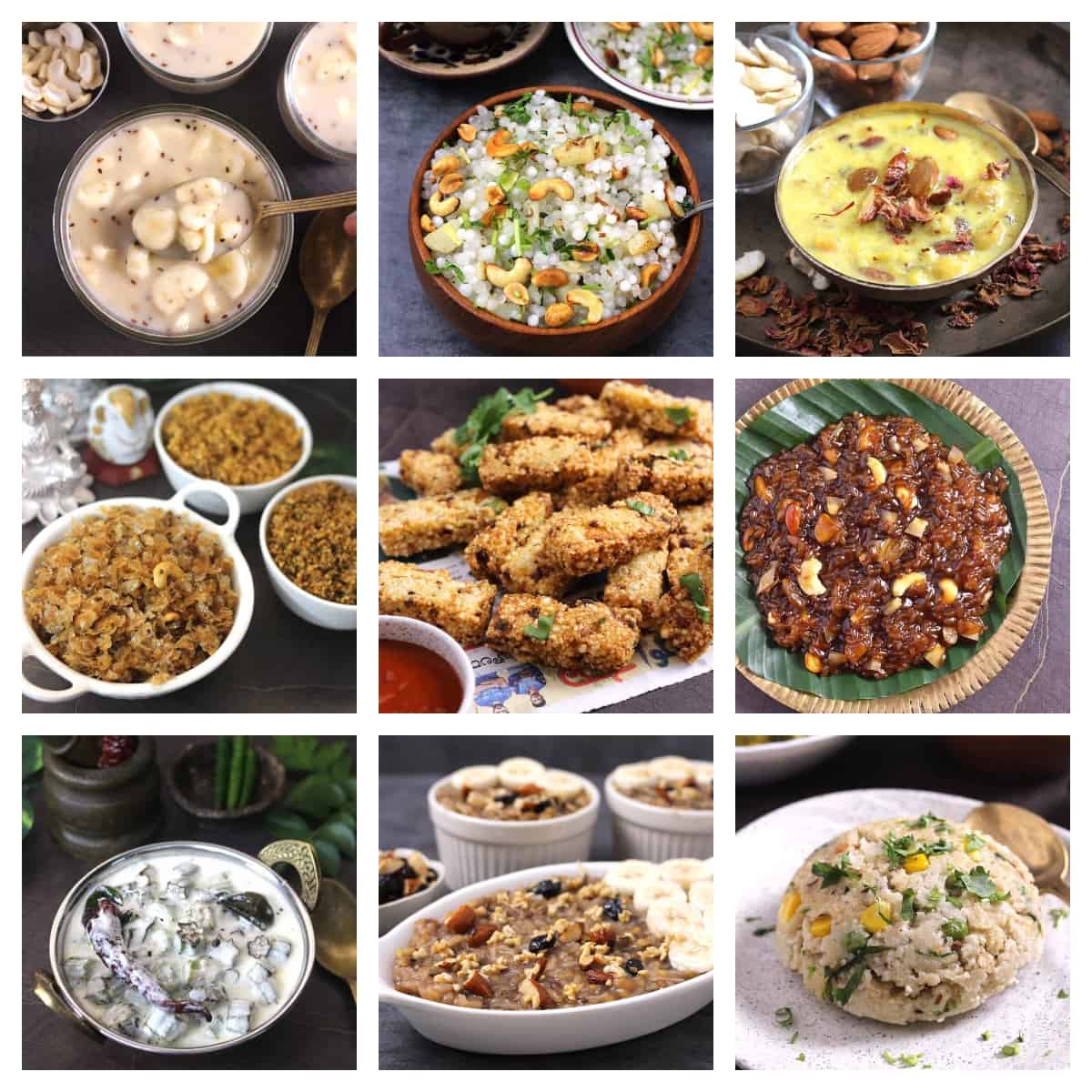
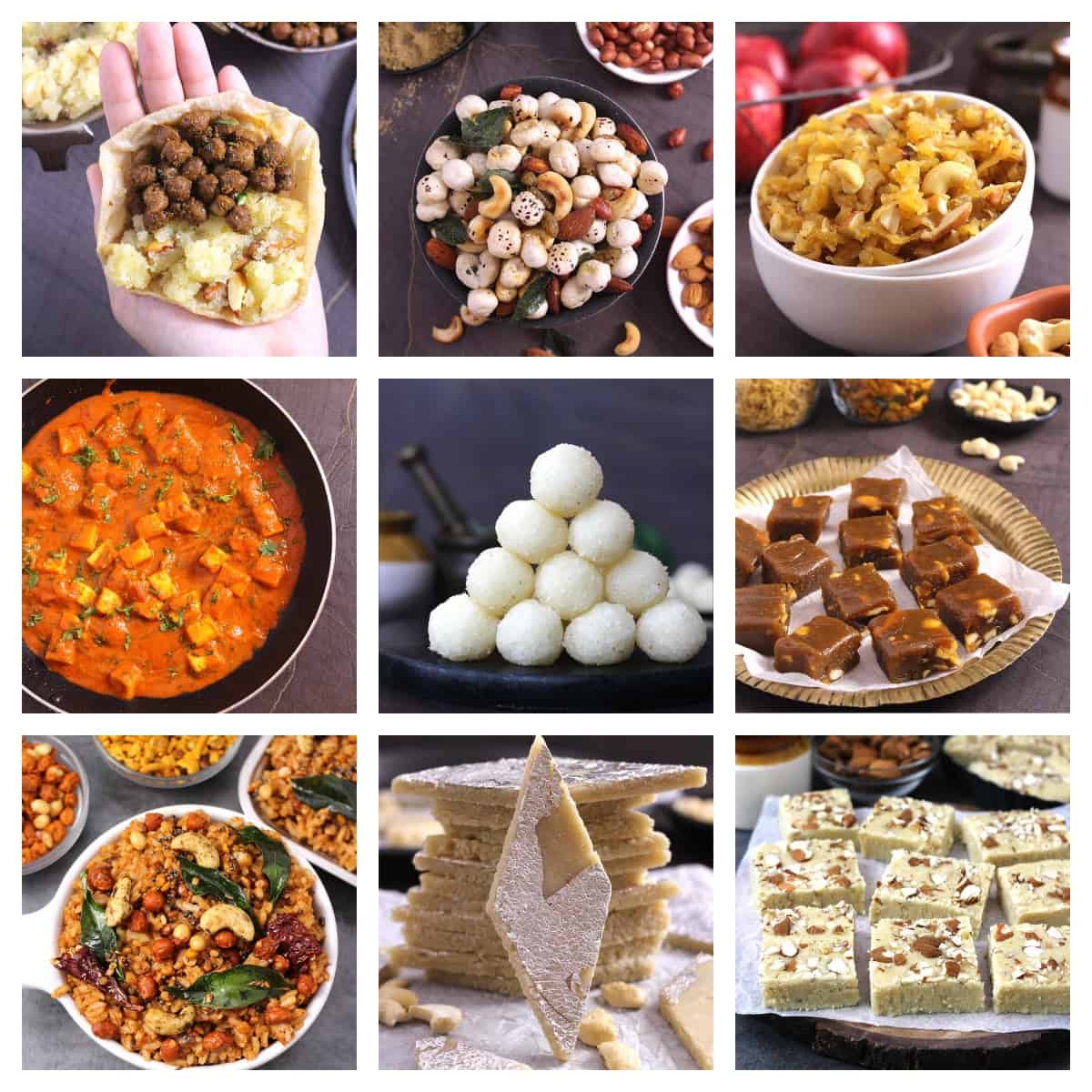
Best Navratri recipes to enjoy during the nine days of Sharad Navratri. This post brings together easy, delicious Navratri fasting recipes, vrat recipes, and upvas recipes for breakfast, lunch, dinner, snacks, sweets, and desserts.
This year, Sharad Navratri will begin on Sunday, 11 October 2026, and end on Tuesday, 20 October 2026 with Vijayadashami (Dussehra).
You will find popular fasting-friendly dishes made with sabudana, makhana, sama rice, kuttu, singhara, rajgira, potatoes, fruits, nuts, etc., along with traditional Navratri prasadam and bhog ideas. I have also included South Indian Navratri naivedyam and prasadam recipes to reflect regional traditions, the significance and importance of each day, and the fasting rules to follow.
Jump to:
Sharad Navratri or Durga Navratri
Sharad Navaratri is an auspicious and popular festival celebrated across the Indian subcontinent to worship Goddess Durga.
Subscribe Below to Receive Free Meal Plans Every Week
Sign up for our newsletter to receive our weekly meal plans directly in your inbox!
'Nava' means nine, and 'Ratri' means nights; it is a festival celebrated for nine nights and ten days. The 10th day is called Dusshera (or dussera also as Vijayadashami). This festival begins on the first day of Ashwin Shukla Paksha (the 1st day of the bright fortnight of the lunar month Ashwin). We call this Sharadiya Navratri, Durga Navratri, Karthik Navratri, and Asoj Navratri; it differs from Baisakhi Navratri, which falls in April.
Every night of the festival, a new avatar (or cosmic form) of Durga is worshipped. Devotees fast during the day, perform different pujas, and read texts such as Durga Saptashati, Lalitashasranama, and others that praise the valor and describe the beauty of the Goddess.
In the evening, devotees sing bhajans, perform puja, offer specially prepared naivedyams (or bhog or Navratri recipes), and then distribute naivedyam among other devotees and friends.
Navratri 2026 Dates, 9 Days, Goddess, Prasadam (Bhog)
| Navratri Day | Date | Goddess | Recipe Ideas |
| Day 1 | October 11 | Maa Shailaputri | Ghee-based bhog |
| Day 2 | October 12 | Maa Brahmacharini | White-sugar |
| Day 3 | October 13 | Maa Chandraganta | Milk |
| Day 4 | October 14 | Maa Kushmanda | Malpua |
| Day 5 | October 15 | Maa Skandamata | Banana |
| Day 6 | October 16 | Maa Katyayini | Honey |
| Day 7 | October 17 | Maa Kalaratri | Jaggery |
| Day 8 | October 18 | Maa Mahagauri | Coconut |
| Day 9 | October 19 | Maa Siddhidatri | Sesame seeds |
| Day 10 | October 20 | Vijayadashami | Festival sweets |
What can you eat during navratri fasting?
Fasting rules vary by region. I know people who eat only fruits and milk for nine days, and some people eat just one meal a day, while others skip adding salt and use rock salt or sendha namak. Nothing is right or wrong in what another person is doing. It depends on what you follow in your community and your belief system.
Some basic rules that I know are:
- You can consume any variety of fruits and dry fruits.
- Restrictions on the use of flour and grains - It depends on what you have been following traditionally. For example, in a South Indian Konkani household, rice is not allowed until the pooja is complete, but you can eat anything with semolina (sooji), poha, and wheat. But for many in North India, you are not supposed to eat anything with wheat or wheat products; instead, people prefer to use water chestnut flour (singhare ka atta), buckwheat flour (kuttu ka atta), amaranth flour (rajgira ka atta), arrowroot flour (kuve pita), sabudana pearls or flour, and barnyard millet (sama ke chawal, samo rice)
- Root vegetables like potatoes and sweet potatoes are consumed.
- Some parts of India do not consume greens like spinach and herbs.
- You must prepare all food without onion or garlic. (sattvic)
- Milk products and dairy products are allowed.
- Non-veg food is a strict no-no.
- Drink plenty of water/coconut water/fruit juices and stay hydrated.
Navratri Breakfast, Lunch and Dinner
During the festival, people generally prefer to have the same recipe for all three meals - breakfast, lunch, and dinner. I have no onion, no garlic vrat recipes made using paneer, chana (black chickpeas), aloo (potato), sama ke chawal (barnyard millet, samo rice), sabudana (sago, tapioca), toor dal, yogurt (dahi), moong dal. Skip salt and add rock salt (sendha namak) if preferred.

Sabudana Tikki with Paneer
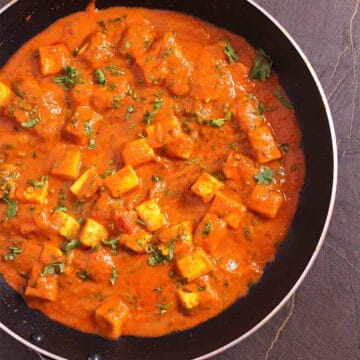
Vrat Wale Paneer Curry
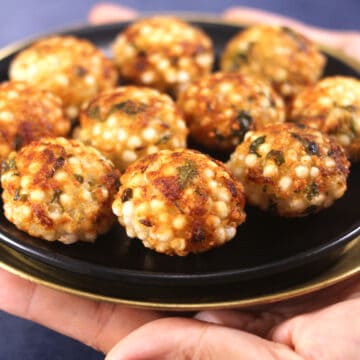
Sabudana Appe / Paniyaram
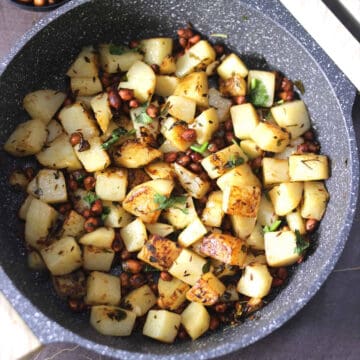
Vrat Wale Aloo
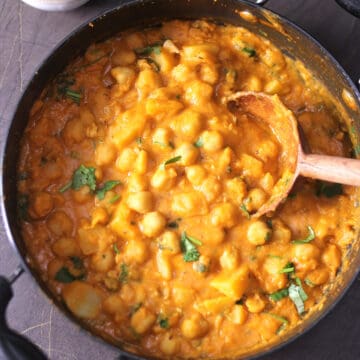
Navratri Vrat Wale Chole
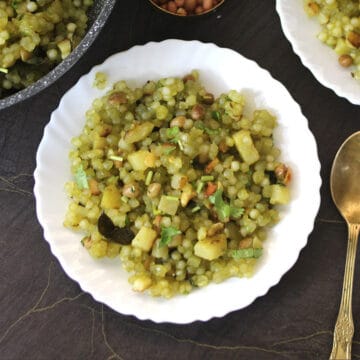
Hariyali Sabudana Khichdi
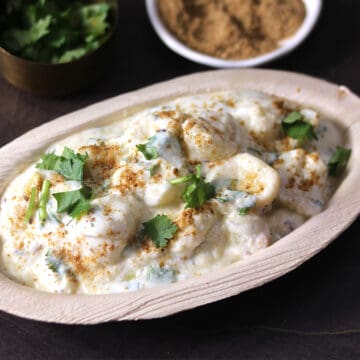
Vrat Wale Dahi Aloo
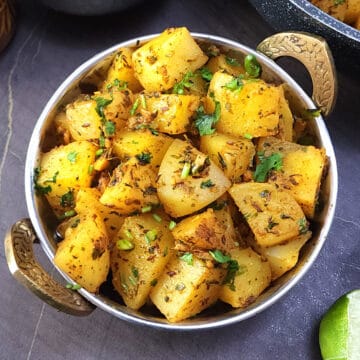
Easy jeera aloo
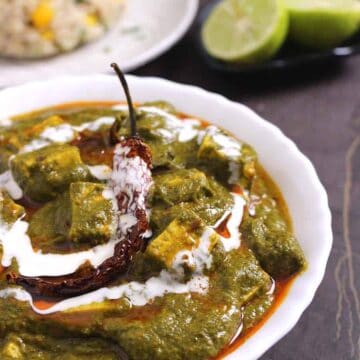
No Onion No Garlic Palak Paneer For Fasting, Vrat, Upvas | Farali Paneer
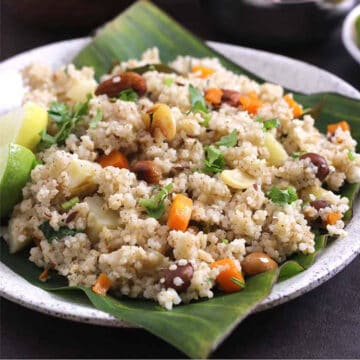
Samak Chawal Pulao

Sabudana Dosa with Millet
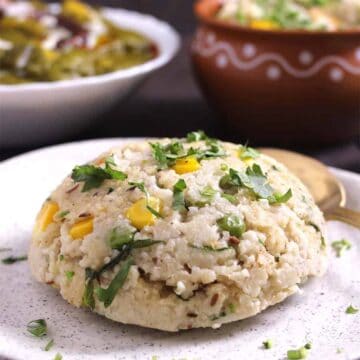
Samo Rice Upma
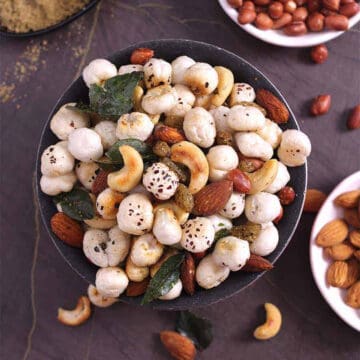
Roasted Makhana with Dry Fruits & Nuts
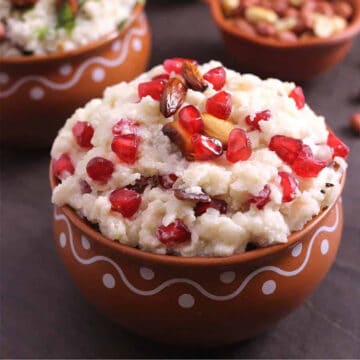
Dahi Poha - Sweet & Savory Version

Sabudana Khichdi

Instant Sabudana Fries, Sabudana Vada
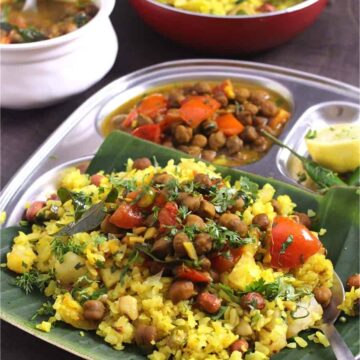
No onion No garlic Tarri Batata Poha
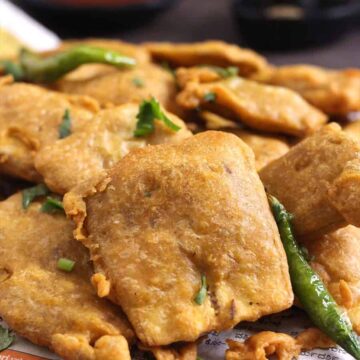
How to make Banana Pakora, Bajji

Sabudana Idli, Sago Idli

Traditional Maharashtrian Sabudana Vada
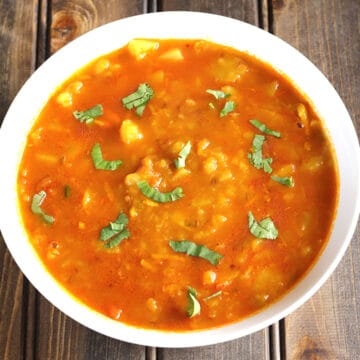
Aloo Rasedar
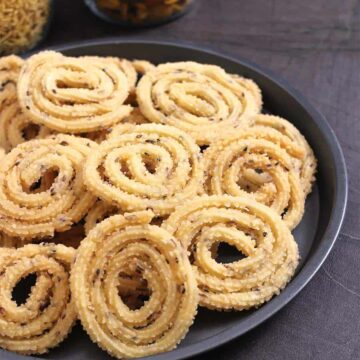
Samo Rice Chakli, Vrat or Farali Chakli

Potato Sabzi - No Onion No Garlic
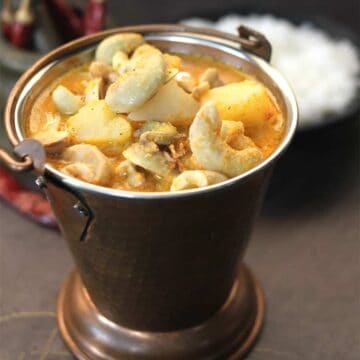
Cashew & Potato Curry
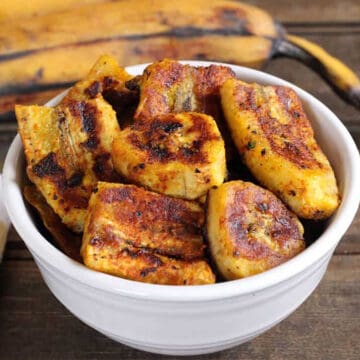
Pan Fried Plantains
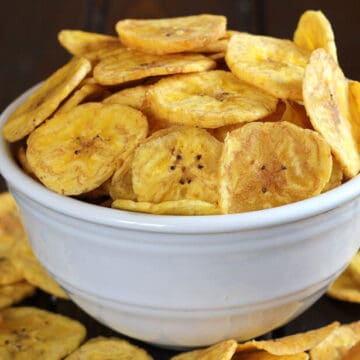
Banana Chips
Sweets and desserts for Naivedyam, Prasad, Bhog
Any festive meal is incomplete without mithai, Indian sweets & desserts. I am sharing some simple, quick, and easy recipes you can make ahead and store to eat during vrat or upvas days, and also offer to Goddess Lakshmi or Maa Durga as prasadam, naivedyam, or Bhog during the Navaratri festival. Some of them are made using milk and milk-based products, jaggery, some with fruits, and some flourless (without any flour)
Navratri Fasting Sweets
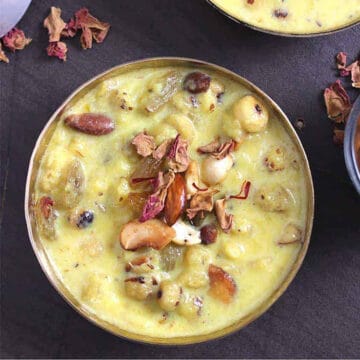
Phool Makhane Ki Kheer

Badam Ladoo , Almond Laddu
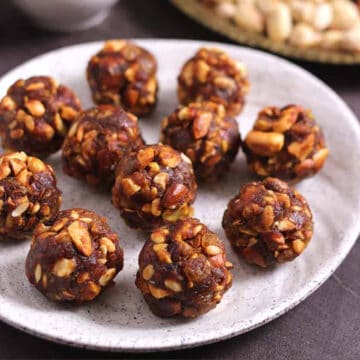
Dry Fruits Ladoo, Dates Laddu
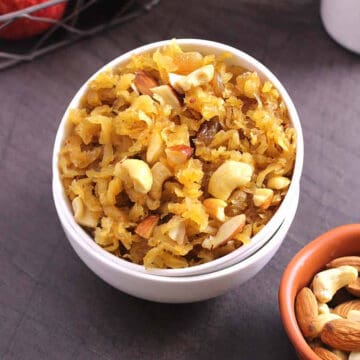
Apple Halwa, Seb Ka Halwa

Easy Fruit Salad Recipe

Sabudana Kheer, Sabudana Payasam
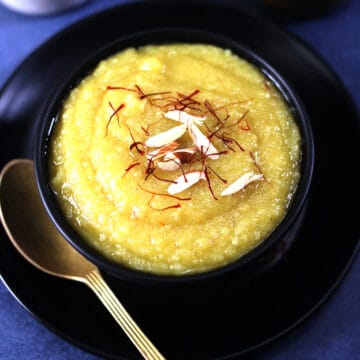
Badam Halwa
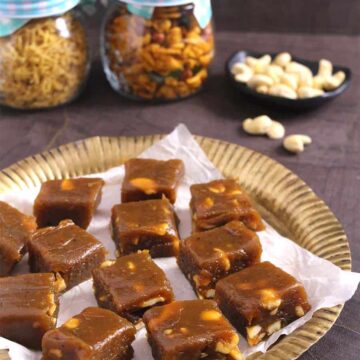
Banana Halwa, Flourless Recipes
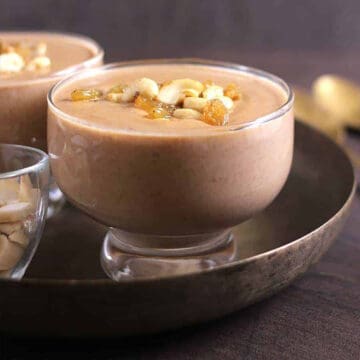
Dates Kheer, Khajoor Ki Kheer
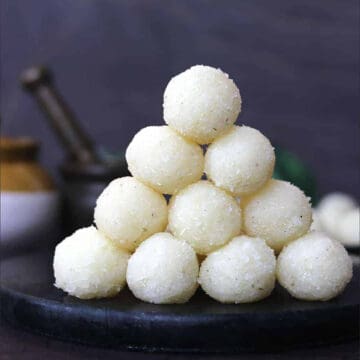
Coconut Ladoo, Nariyal Ke Laddu
Navratri Bhog & Prasad
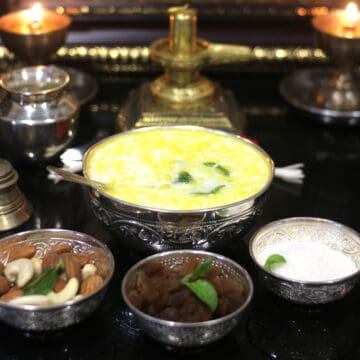
Panchamrut Recipe
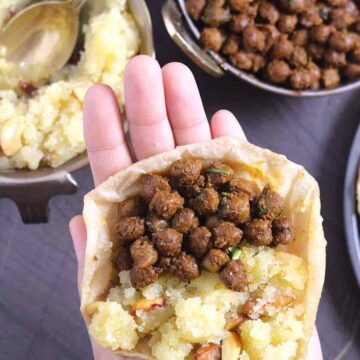
Halwa Poori Chana, Ashtami Prasad
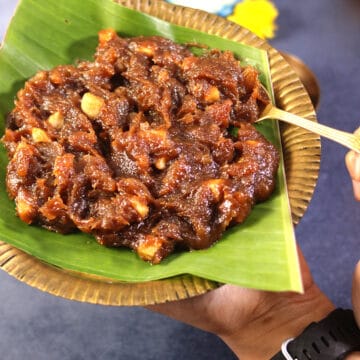
Panchamirtham
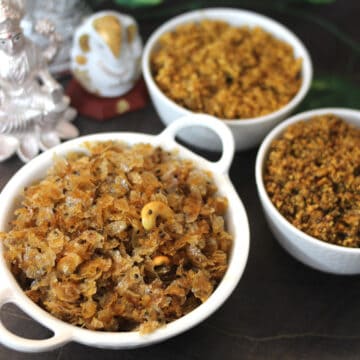
Panchakajjaya | Panchkadayi | Prasad, Naivedyam Recipe
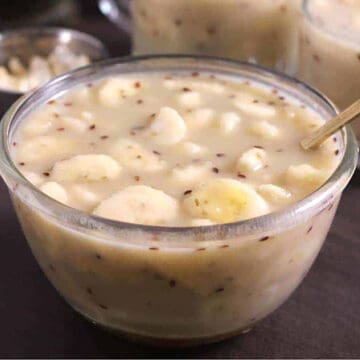
Banana Rasayana - no cooking required
navratri regional festival sweets
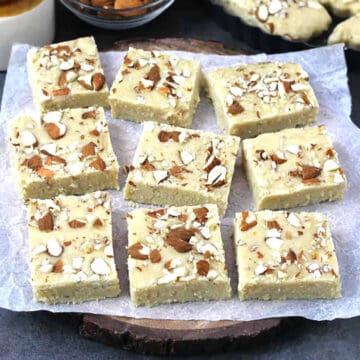
Milk Barfi (Milk Powder Burfi)
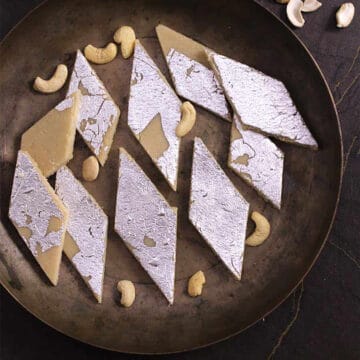
Kaju Barfi, Kaju Katli, Cashew Burfi
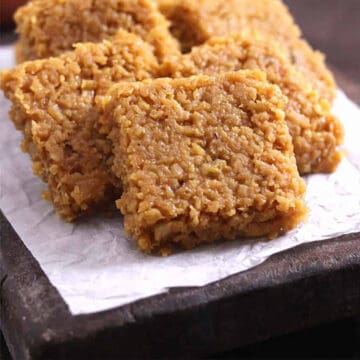
Coconut Barfi or Nariyal Ke Burfi with Jaggery
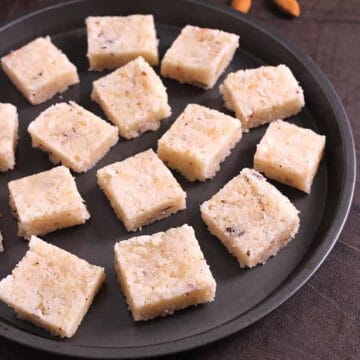
Traditional Coconut Burfi
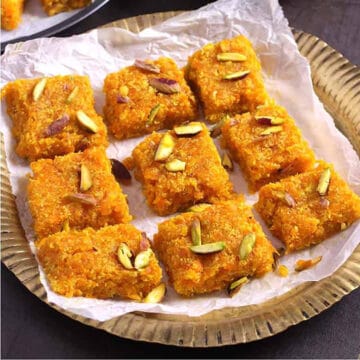
Gajar Ki Barfi, Carrot Burfi
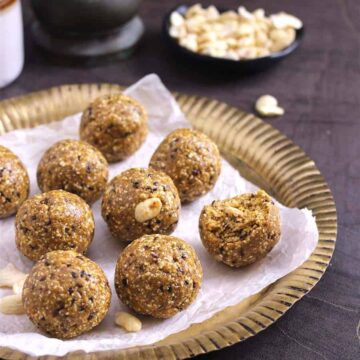
Ladoo with Jaggery
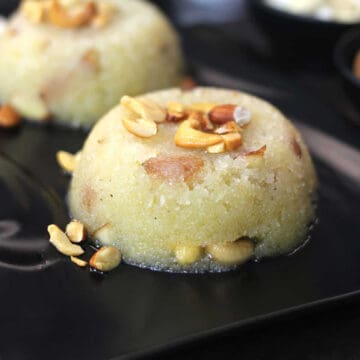
Sheera or Sooji Halwa
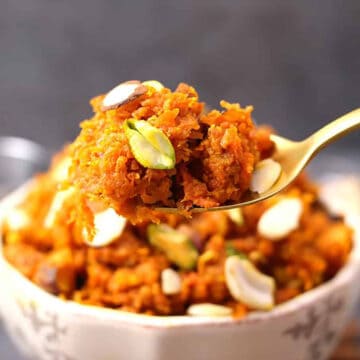
Gajar Ka Halwa, Carrot Halwa
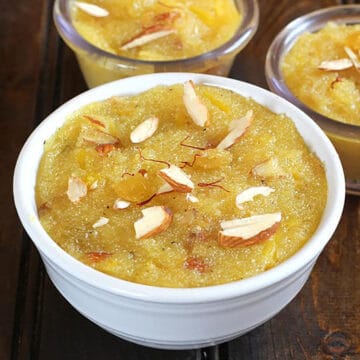
Pineapple Sheera, Pineapple Halwa
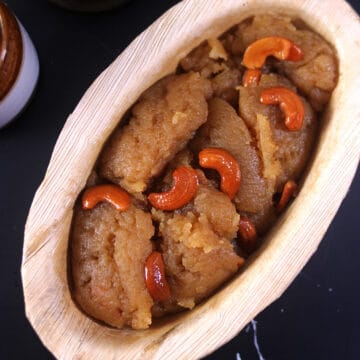
Atta Halwa, Kada Prasad
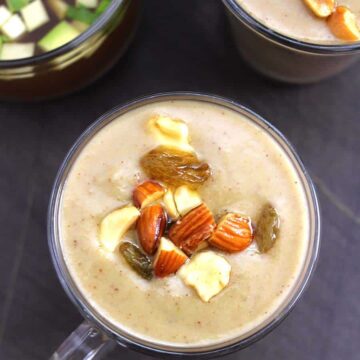
Gasagase Payasam, Poppy Seeds Pudding

Chana Dal Sabudana Kheer, Payasam with Jaggery
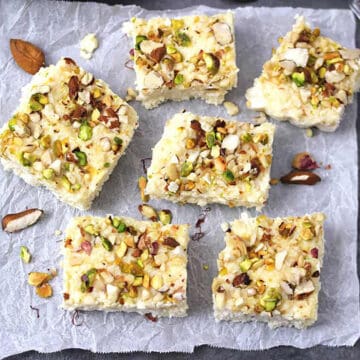
Kalakand Sweet
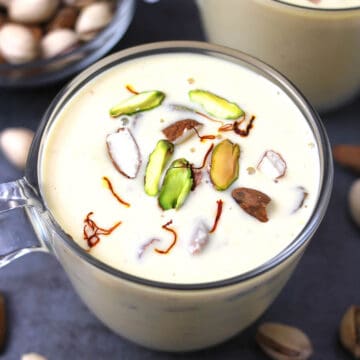
Making of Basundi at home
South Indian Navratri Rice Recipes
Fasting traditions vary by region and family. Regular rice is generally avoided in strict North Indian vrat, while rice-based dishes are prepared as naivedyam and prasadam in South Indian traditions. Follow your family's fasting customs.
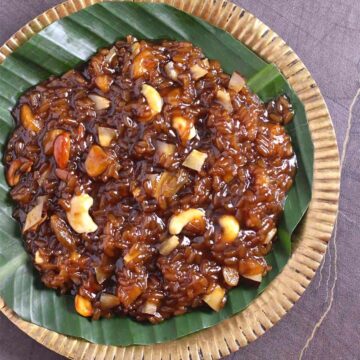
Temple Style Nei Payasam, Rice Kheer With Jaggery

Doodh Pak
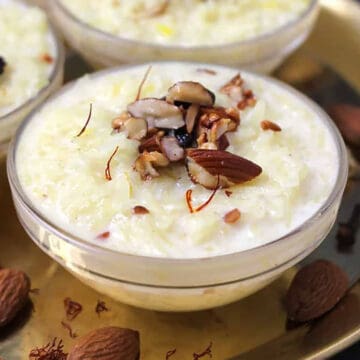
Rice Kheer
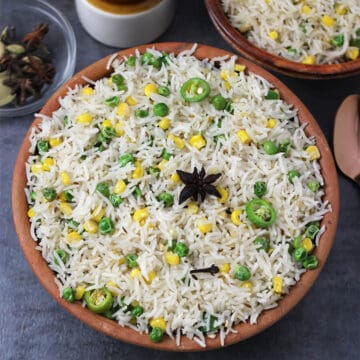
How to make Ghee Rice for Navratri
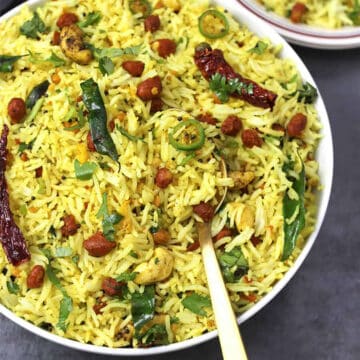
Lemon Rice, Chitranna
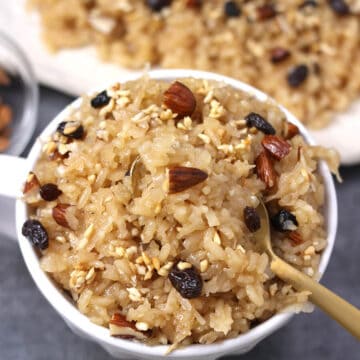
Jaggery Rice, Gur Ke Chawal, Gudanna
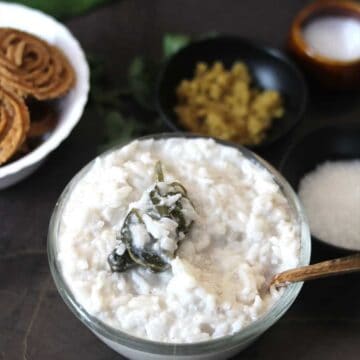
Traditional Coconut Milk Rice for Navratri
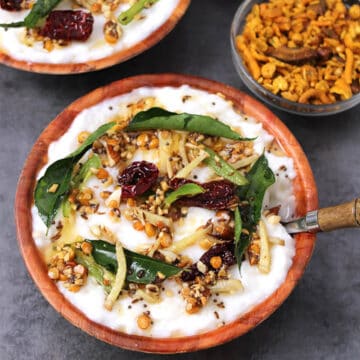
Curd Rice, Yogurt Rice, Mosaranna

Rice Kesari Bath, Saffron Rice
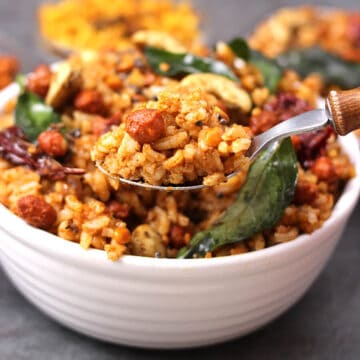
Puliyogare, Tamarind Rice
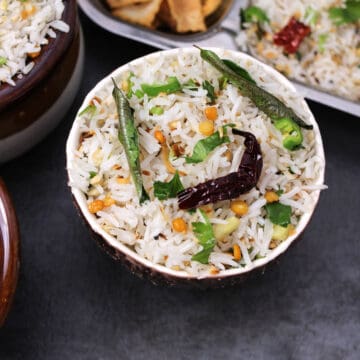
Coconut Rice
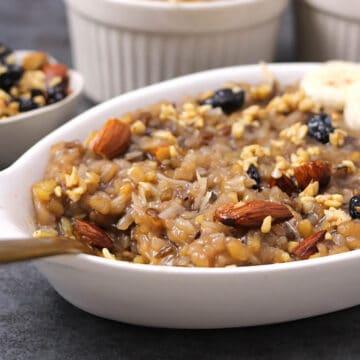
Sweet Moong Dal Khichdi
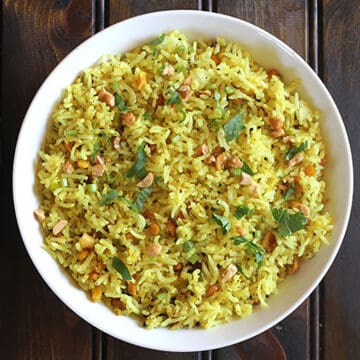
Temple style chitranna
Importance of 9 days of Navratri :
Goddess Shailputri (daughter of the mountain) is the deity of worship on the first day of Navaratri. By offering ghee or bhog prepared in ghee, devotees are believed to be blessed with good health.
The ascetic Maa Brahmacharini is worshiped on the second day of Navratri. Just like her pure white saree, she is pleased with bhog prepared in white sugar and blesses devotees' family with longevity.
Maa Chandraghanta is worshiped on the third day of this auspicious festival. Chandraghanta means half-moon shaped like a bell - Maa is believed to adorn a half-moon as the jewel in her forehead. Devotees of Maa Chandraghanta are absolved of all sins & mental stress and filled with courage. On this day, offer naivedyam prepared using milk.
Maa Kushmanda is the Goddess of health, wealth and strength and is the deity of worship on the fourth day of Navaratra. Devotees can seek her divine blessings by offering malpua as bhog.
On the fifth day of Navratri, Skandmata - meaning the mother of Skanda, is worshiped by offering delicacies prepared using bananas. She blesses her devotees with salvation and prosperity.
The daughter of Katyayana i.e., Maa Katyayani is worshiped on the sixth day of navaratri. Devotees who offer honey or naivedyam prepared with honey are blessed with good looks.
Goddess Kaalratri, or Kalaratri, is the fiercest form of Navadurga. Devotees who offer Jaggery or bhog prepared using jaggery are blessed with confidence and can get rid of all negative energies.
On the eighth day of Navratri, also called as ashtami or durgaashtami Maa Mahagauri is worshiped. Devotees can seek her blessings by offering coconut or bhog prepared using coconut. Goddess blesses devotees with health and prosperity and fulfills all their wishes.
On the ninth day, Mata Siddhidatri blesses devotees with extraordinary powers. Bhogs prepared using til or sesame seeds are known to please the Goddess.
Navratri South India
In South India, many devotees read Lalitasahasranama during Navratri. The verses in this text reveal that Goddess Durga (Lalita) can be pleased by offering rice-based dishes on each day of Navratri. I have given below rice dishes, no onion, no garlic, that I offer as prasadam or bhog to Goddess Lakshmi.
Once again, I wish you all a very happy and prosperous Navratri (Dussera), Durga Puja
Mangalore Dussehra & South Indian Navratri Traditions
Since I come from the Konkan coast, at all Devi temples, anna-dana (distribution of cooked food) is a common feature. Similar to puja celebrations in West Bengal, the clay idol of the Devi is worshipped mainly in the form of Sharada (Goddess of Knowledge).
In Mangalore, at Kudroli Gokarnanathakshetra (temple), clay idols of all 10 forms of Devi, along with Sharada and Ganesha idols, are worshipped for a period of 10 days, and on the 10th night, these idols are taken on tableaux across the city with a lot of pomp and celebration. The tableaux procession lasts for around 12 hours and the idols return to the temple where one last puja is performed before being immersed in a large temple pond.
This celebration has been popular in Mangalore for the last 20 - 25 years and is popularly referred to as Mangalore Dussera. Sharada pooja is also very popular at Venkataramana Temples in the konkani region and the most popular among them are in Venkataramana Temples at Mangalore, Karkala, and Udupi. Dussera celebrations in Mysore are so famous that people from all over the world visit the city of Mysore to participate in the festivities.
Most of the time winter break at schools coincides with this festival. Given this convenience, family get-togethers are very common. A variety of food and snacks are prepared from breakfast to dinner, and everyone has a great time. The delicacies prepared are usually first offered as bhog and naivedyam to the Goddess, and therefore, the menu is planned in accordance with its importance to the festival.
I have put together a list of the main Deities for each day, the main ingredient used in each day's bhog or Navratri recipes main ingredient and its importance according to the scriptures. Along with the list, you can also find a list of recipes from my blog that you may prepare during the festival. Hope you all have a great time this Navaratri with your family and friends!
Recipe FAQs
Popular Navratri foods include vegetarian dishes made without onion and garlic, along with some grains. Dishes made with sabudana, barnyard millet, buckwheat flour (kuttu ka atta), and water chestnut flour (singhara atta), as well as root vegetables like potatoes, sweet potatoes, fruits, and dairy, are consumed for 9 days if you are fasting.
On Navratri, Goddess Durga is offered 9 different items as naivedyam over 9 days, and each ingredient has its significance. These include ghee, sugar, milk, malpua, bananas, honey, jaggery, coconut, and sesame seeds.
If you follow strict North Indian vrat rules for Durga Puja and Navratri, you cannot eat any variety of rice. But if you follow South Indian tradition and Lalitha Sahasranam, you can eat rice for one meal a day.
Recipe card
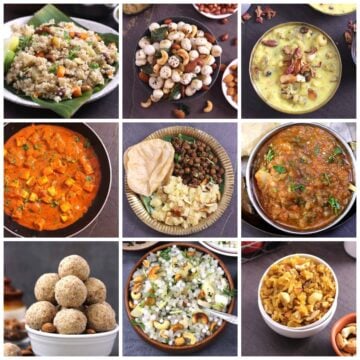
Navratri Recipes | Navratri Fasting Recipes for 9 days : Sabudana Kheer
Ingredients
- ½ cup Sabudana (Tapioca Pearls or Sago)
- 1 ½ cups Water
- 1 ½ cups Milk (Use coconut or any non-dairy milk for vegan version)
- ½ cup Sugar (adjust accordingly)
- 2 tablespoon Cashews
- 2 tablespoon Almonds
- 2 tablespoon Pistachios
- 1 tablespoon Raisins
- 2 tablespoon Dried rose petals (Use food-grade rose petals. Roses available commercially are sprayed with insecticides, so beware)
Instructions
- Wash sabudna and soak them in water for 2 hours (This step is optional but mainly done so that cooking time is reduced.)½ cup Sabudana (Tapioca Pearls or Sago)
- Meanwhile, in a nonstick pan on medium to low flame, you can dry roast almonds, pistachios, and cashews till they become aromatic. Keep this aside.2 tbsp Cashews, 2 tbsp Almonds, 2 tbsp Pistachios
- In a pan or pot on medium flame, add sabudana and 1.5 cups water and cook till sabudana becomes semi-transparent and is 90% cooked through. Keep stirring to avoid them from burning at the bottom. You can take few sabudana pearls and check if they have started becoming soft. Sabudana pearls should not be dense or hard. You can check my video on how to make sabudana kheer1 ½ cups Water
- Once the sabudana has almost cooked through, add milk and bring it to a boil and cook till sabudana becomes soft and transparent. Keep stirring during the process – as the starch from sago and milk fats can settle at the bottom and burn.1 ½ cups Milk (Use coconut or any non-dairy milk for vegan version)
- Now add sugar, start with ¼ cup and adjust accordingly. I have added ½ cup as this gave the right amount of sweetness to the kheer.½ cup Sugar (adjust accordingly)
- Finally, add the roasted nuts, raisins, rose petals, and simmer for another 2 to 3 minutes. Switch off the flame.1 tbsp Raisins, 2 tbsp Dried rose petals (Use food-grade rose petals. Roses available commercially are sprayed with insecticides, so beware)
- Sabudana Kheer is now ready. Serve hot or cold, and enjoy!
Notes
Nutrition
Did you like this recipe? Please leave a star ⭐️⭐️⭐️⭐️⭐️ rating below and/or a review in the comments section. You can also stay in touch with us through social media by following us on Pinterest, Facebook, Instagram, and Twitter.
sophie says
So much to choose from! All the recipes look super delicious. Can't wait to try a lot of these !!
Dina and Bruce says
Thank you for sharing these recipes. The coconut rice was such a delicacy. Can not wait to make more of these wonderful and authenic dishes.
Alison Corey says
Thank you for sharing this comprehensive guide to Navratri fasting! It's not just about the recipes but also understanding the significance and rules. Very informative.
Chelsea says
Many of these recipes are completely new to me and I'm so excited to try more of them. What an excellent and special collection. The coconut burfi is what I'll make next!
Biana says
So many great recipes, apple halva looks delicious!